
Range is a capability, permission is the limit
Several of our drones are rated for a 10 km operating range. That opens up cargo routes to remote sites, long patrol loops and wide-area searches. But in most countries, the real limit on range is not the radio link or the battery. It is the rule that you must keep the drone within visual line of sight (VLOS) unless you hold a specific approval for beyond visual line of sight (BVLOS) flight.
So a long-range drone programme has two parts: the right aircraft, and the right approvals.

Payload Drone
P50 Heavy Lift Drone
50 kg payload heavy-lift drone for delivery, firefighting support, rescue drops and industrial inspection.
- Max payload50 kg
- RoleCargo / rescue / firefighting

Payload Drone
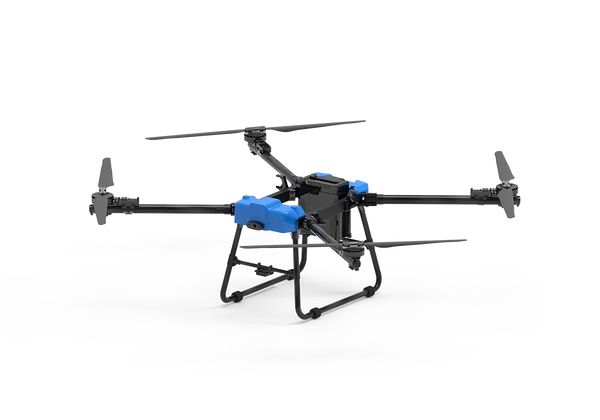
THEA 200MP Coaxial Octocopter
8-axis coaxial heavy-lift octocopter rated for 70 kg payload with up to 45 minutes endurance.
- Max payload70 kg
- EnduranceUp to 45 min*
Payload Drone
D50 Transport Drone
50 kg payload transport drone rated to 5000 m altitude and 10 km range, built for mountain and long-distance cargo.
- Max payload50 kg
- Range10 km

Payload Drone
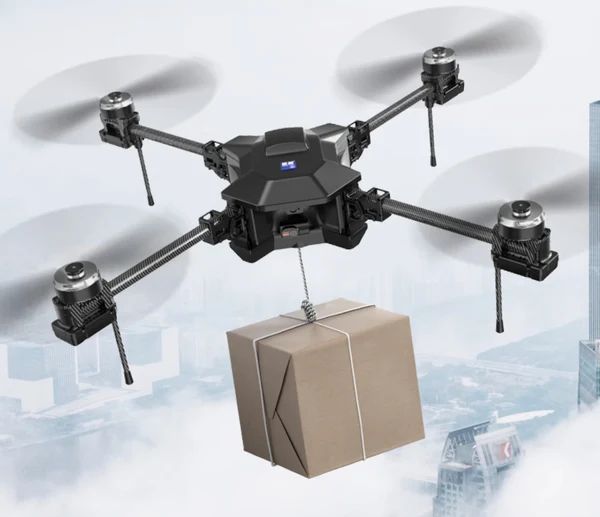
MX4-10 Multi-Function Industrial Drone
5 kg payload, 10 km multi-function drone with loudspeaker, searchlight and drop thrower. Rescue-ready, with OEM/ODM support.
- Payload5 kg
- Range10 km
Payload Drone
SY800 Heavy Lift Drone
2–10 kg payload drone with 10 km range, 3-axis 1080P/2K camera, GPS, thrower, loudspeaker and lighting.
- Payload2–10 kg
- Range10 km
Long-range models
- D50 Transport Drone: 50 kg payload, 10 km range, rated to 5000 m altitude. Long-distance cargo.
- MX4-10: 5 kg, 10 km, with loudspeaker, light and thrower. Search, rescue and patrol.
- SY800: 2–10 kg, 10 km, with a 3-axis camera and GPS waypoint missions. Patrol, delivery and inspection.
Range figures are manufacturer ratings. Real range depends on payload, wind, temperature, altitude and the radio environment.
What BVLOS approval typically involves
Requirements vary, but regulators commonly look at:
- Operational risk assessment. In Europe and many other places, the SORA methodology developed by JARUS.
- Ground risk: population density under the route, and mitigations
- Air risk: other airspace users, and detect-and-avoid measures
- Command and control link: reliability, redundancy and lost-link behaviour
- Aircraft reliability: maintenance and technical records
- Crew competence: training and procedures
- Emergency procedures: flight termination and contingency landing sites
In the US, BVLOS currently needs a waiver or exemption from the FAA. In the EU, it is handled within the specific category through EASA rules and national authorities.
Practical tips for long-range operations
- Start within VLOS to build experience and data
- Use observers to extend operations while BVLOS approval is pending (where permitted)
- Survey routes for terrain, obstacles and radio shadows
- Plan energy reserves of at least the return trip plus margin
- Pre-program failsafes for return-to-home or a safe landing on link loss
- Log everything, because it supports future approvals