
Why farms use drones
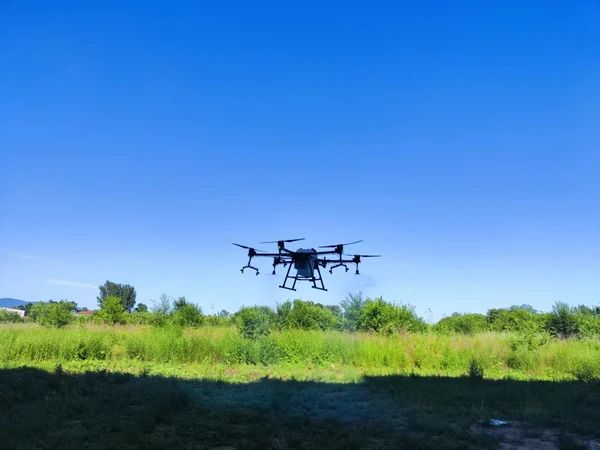
Agricultural drones have become one of the fastest-growing drone categories in the world, particularly in Asia and Latin America, and increasingly elsewhere. The reasons are practical:
- No soil compaction, because nothing drives on the field
- No crop damage from wheels or tramlines
- Access to wet, steep, terraced or small fields
- Precision from GPS-guided flight lines and controlled application
- Safety, because operators stand away from the spray cloud
- Speed compared with backpack spraying
Payload Drone
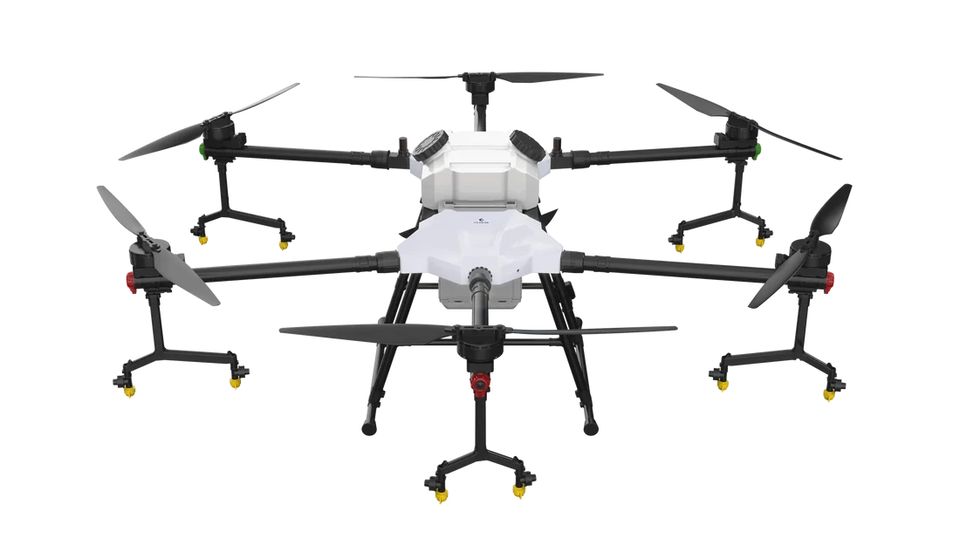
TTA G300 Agriculture Drone
Six-axis agricultural drone with a 30 L tank for spraying and seed spreading, rated at about 24 acres per hour.
- Tank30 L
- Work rate≈24 acres/hour*
The TTA G300
The TTA G300 is a six-axis agricultural drone with:
- A 30 L tank
- A rated work rate of about 24 acres (≈9.7 ha) per hour
- Spraying of liquids and spreading of seed and granules
For contractors, doing both jobs with one aircraft means more working days a year.
A productive field day
The rated work rate is only achieved with good logistics:
- Mixing station close to the field, with clean water and correct mixing procedures
- Battery rotation: several packs, with charging keeping pace with flying
- Short ferry distance between field and refill point
- Planned flight lines in mission software, with boundaries and obstacles mapped
- Weather checks: wind speed and direction, temperature and inversion conditions affect drift
- Records: product, rate, area, time and weather for every application
Regulations for agricultural drones
Spray drones are regulated twice, as aircraft and as pesticide application equipment.
- Aviation: registration and pilot qualifications. In the US, dispensing agricultural products requires Part 137 certification in addition to drone rules. See the FAA. Many countries have specific approval routes for agricultural drone operations.
- Pesticides: products must be approved for aerial or drone application in your market, and applicators often need licences. In the EU, aerial spraying of pesticides is generally prohibited except under specific derogations, so check national rules carefully.
- Records and buffers: keep application records and respect buffer zones near water, homes and sensitive areas.
Our agricultural payload drones article covers this in depth.
Beyond spraying
- Seeding cover crops and pasture
- Granular fertiliser spreading
- Crop scouting with camera or multispectral payloads (on survey platforms such as the GAIA 160MP)