
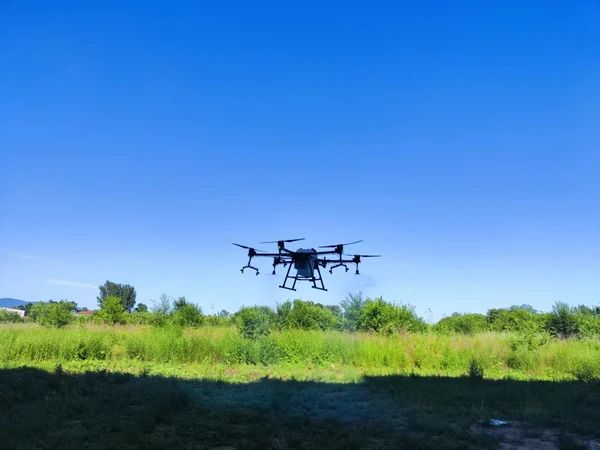
Agriculture is the biggest drone market there is
Across Asia, Latin America and increasingly Europe, North America and Oceania, farms and agricultural contractors have adopted drones faster than almost any other industry. The reason is simple: a drone can do jobs in the field that are slow, damaging or dangerous with ground equipment or people on foot.
What drones do on the farm
Crop protection spraying
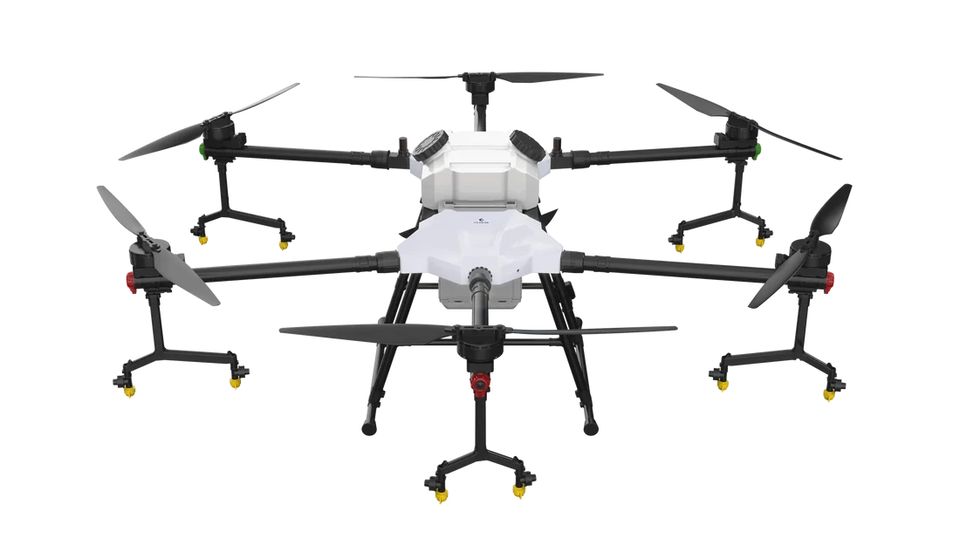
Applying approved crop-protection products and foliar nutrients from the air. There is no soil compaction, no wheel damage to standing crops, and it works on wet, steep or terraced fields. The TTA G300 carries a 30 L tank and is rated at about 24 acres per hour.
Seeding and spreading
Cover crops sown into standing crops, pasture over-seeding, rice seeding and granular fertiliser. The G300 can be configured for spreading as well as spraying.
Crop scouting and mapping
Multispectral and RGB mapping to find stress, pest and disease hotspots, drainage problems and uneven emergence. Survey platforms such as the GAIA 160MP carry mapping sensors. See mapping drones.
Farm logistics
Moving inputs or harvest crates across difficult terrain, such as orchards on slopes or terraces, with heavy-lift platforms like the THEA 220MP.
Payload Drone
TTA G300 Agriculture Drone
Six-axis agricultural drone with a 30 L tank for spraying and seed spreading, rated at about 24 acres per hour.
- Tank30 L
- Work rate≈24 acres/hour*
Payload Drone
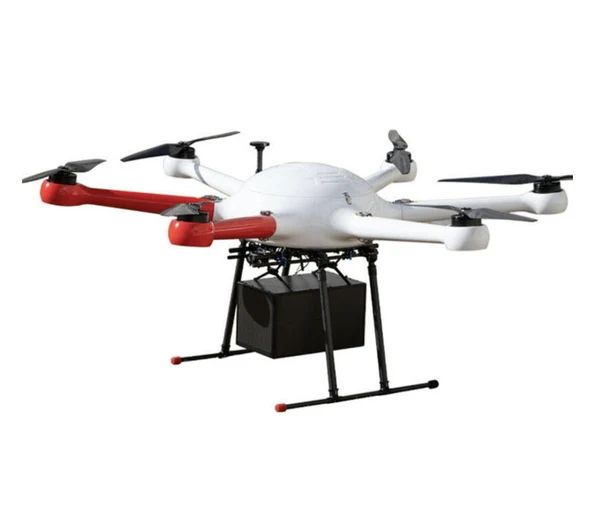
GAIA 160MP Hexacopter
Six-rotor industrial hexacopter with 20 kg payload: a versatile mid-weight platform for sensors, cargo and inspection.
- Max payload20 kg
- LayoutHexacopter (6 rotors)

Payload Drone
THEA 220MP Heavy Lift Quadcopter
Large-format quadcopter with 40 kg payload. A simple, efficient heavy lifter with fewer motors to maintain.
- Max payload40 kg
- LayoutQuadcopter
The business case
| Benefit | How it pays |
|---|---|
| No soil compaction | Better yields, and no tramline losses |
| Timeliness | Spray when conditions are right, even if the ground is wet |
| Access | Treat fields tractors cannot reach |
| Labour | Replace backpack spraying crews |
| Safety | Operators kept out of the spray cloud |
| Contracting income | Sell spraying and seeding services to neighbouring farms |
What to plan for
Regulation
Agricultural drones are regulated as aircraft and as pesticide application equipment. In the US, dispensing agricultural products by aircraft requires Part 137 certification as well as drone rules. In the EU, aerial pesticide spraying is generally prohibited except under derogations, so check national rules. Elsewhere, many countries have specific agricultural drone approvals. Products must be approved for drone application, and operators often need pesticide applicator licences.
Field logistics
The rated work rate needs a nearby mixing and refill point, enough battery sets with charging that keeps pace, and planned flight lines.
Drift management
Wind, temperature and nozzle choice affect drift. Respect buffer zones near water, homes and sensitive crops, and keep application records.
Maintenance
Rinse spray systems after use, check nozzles and pumps, and clean the airframe of residues.
Plantations and specialty crops
Drones are especially useful in palm oil, rice, sugar cane, tea, coffee, banana and orchard systems, where terrain, wet soils or crop height make ground equipment difficult. Our country pages for Malaysia, Indonesia, Thailand, Vietnam, the Philippines and Brazil cover regional notes.