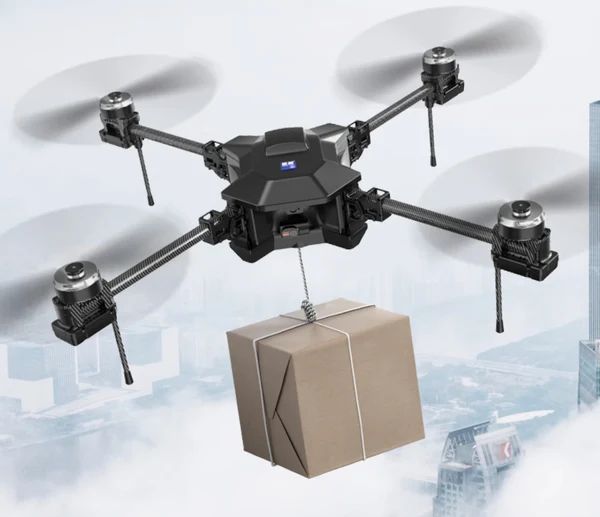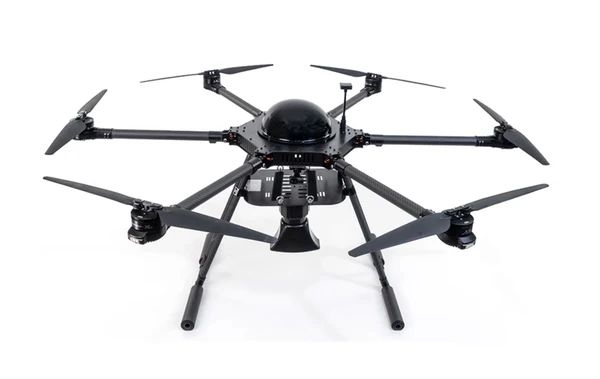
In search and rescue, the first minutes and hours matter most. A drone can be in the air within minutes, cover ground faster than searchers on foot, see into gullies and across water, and, with the right equipment, talk to the casualty and deliver aid before rescuers arrive. This article explains how SAR drones work and how teams build an effective capability.
The three jobs of a SAR drone
1. Find
- Visual cameras with zoom for daylight search
- Thermal cameras (configured to order on suitable platforms) for body heat at night, in vegetation or in cold water
- Searchlights for night operations
- Systematic search patterns such as grids, expanding squares and contour searches
2. Communicate
A loudspeaker lets operators: - Reassure the casualty ("help is coming") - Give instructions ("stay where you are", "grab the float") - Warn others away from danger
3. Deliver
A drop release or thrower delivers: - Life rings and flotation devices - Rescue lines - Radios - First-aid kits, thermal blankets and water
SAR drones in our range
| Model | Payload | Range | SAR features |
|---|---|---|---|
| MX4-10 | 5 kg | 10 km | Loudspeaker, searchlight, thrower. OEM/ODM. |
| SY800 | 2–10 kg | 10 km | 3-axis camera, thrower, loudspeaker, lighting |
| P50 | 50 kg | — | Heavy rescue drops, such as rafts and bulk supplies |
SAR scenarios
Water
Swimmers caught in rip currents, people cut off by tides, capsized boats, flood victims. Drones drop flotation within moments and guide boats or swimmers to the casualty.
Mountain and wilderness
Lost or injured hikers, climbers on ledges, people in ravines. Drones search large areas quickly and locate people in terrain searchers cannot easily see.
Floods and disasters
People stranded on roofs or vehicles. Drones locate them, communicate and drop supplies while boats are directed.
Ice
People through ice. Deliver a line or flotation without sending a rescuer onto unstable ice.
Night searches
Searchlights and thermal imaging extend search capability into darkness.
Building a SAR drone capability
Integrate with incident command
The drone team is part of the operation. They report to incident command and share imagery and findings in real time.
Airspace coordination
SAR often involves helicopters. Agree procedures in advance: altitude separation, communications, and when drones land to give way.
Training
- Search patterns and target recognition (especially thermal interpretation)
- Night, wind, rain and over-water operations
- Accurate payload drops
- Working under stress and fatigue
Readiness
- Batteries charged and rotated
- Pre-packed drop kits ready to attach
- Spare aircraft and propellers
- Checklists and go-bags
Approvals
Public-safety operators often have specific approval routes or exemptions. Volunteer SAR teams may need standard operational approvals. Work with your aviation authority.
Data and privacy
Handle imagery of casualties and the public appropriately.
Measuring success
- Time to first aerial view
- Time to locate the casualty
- Drops delivered accurately
- Crew safety: exposure avoided
Frequently asked questions
How do rescue drones find people?
Using visual and thermal cameras with systematic search patterns, plus searchlights at night.
Can a drone carry a person?
No. SAR drones find, communicate and deliver aid. Rescue of people is done by crews, boats or helicopters.
What can a rescue drone drop?
Within payload limits: flotation, lines, radios, first aid, water and blankets.
Do volunteer SAR teams use drones?
Yes. Many volunteer teams operate drones under appropriate approvals and training.