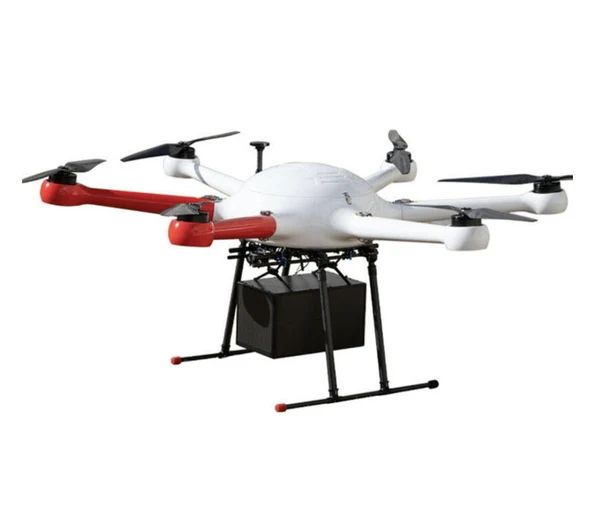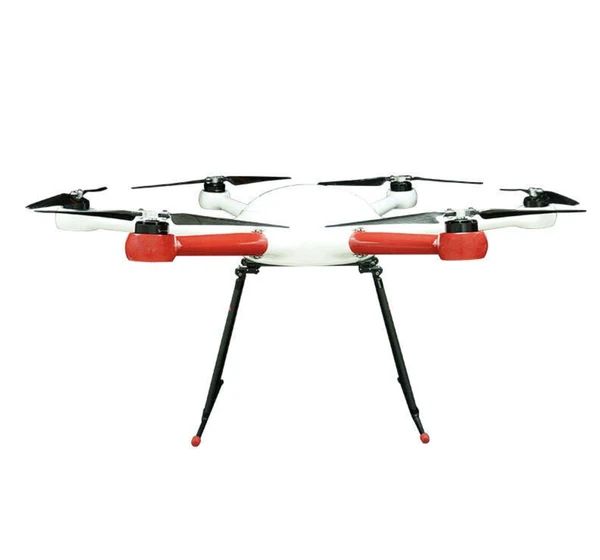
Industrial drones are capital equipment. Buy the wrong one and you get grounded aircraft, missed jobs and an expensive lesson. Buy the right one and it becomes one of the most productive tools your organisation owns. This guide sets out ten criteria that separate good industrial drone purchases from bad ones.
1. Payload fit
Question: Can it carry my typical payload comfortably, with the right interface?
- Size the platform so your typical payload sits well within the rated maximum
- Check mounting, power and control for your specific payload
- Consider centre of gravity, since off-centre payloads affect stability
Read what is a payload drone? for payload vs MTOW.
2. Realistic endurance
Question: How long will it fly with my payload, in my conditions?
Manufacturer figures are best cases. Ask for estimates at your payload, temperature, altitude and wind. Then plan batteries around real flight time.
3. Redundancy
Question: What happens if a motor, propeller or battery fails?
- Quadcopters have little margin after a motor failure
- Hexacopters such as the GAIA 160MP have more
- Coaxial octocopters such as the THEA 190MP add more margin in a compact frame
- Ask about dual batteries, redundant sensors and failsafe behaviour
Redundancy matters most near people, infrastructure and water, and regulators may expect it for some operations.
4. Environmental protection
Question: Can it handle rain, dust, salt, heat and cold?
Check ingress protection (IP) ratings and operating temperature ranges. Do not plan wet-weather operations on a drone not rated for them. The SwellPro FD2, for example, is IP67.
5. Maintainability
Question: How quickly can my team fix it?
- Are arms, motors and propellers field-replaceable?
- Are spares stocked and quick to ship?
- Is there a clear maintenance schedule and documentation?
- Can your technicians do routine work, or must it go back to the supplier?
6. Batteries and charging
Question: Can I keep it flying all day?
- Battery size and weight (heavy-lift packs are large)
- Charge time and charger capacity
- Cycle life and replacement cost
- Storage and transport: lithium batteries are dangerous goods
- Field power: generator or vehicle charging on remote sites
7. Integration and data
Question: Does it work with my sensors, software and workflows?
- Sensor compatibility and payload power
- Mission planning software
- Data outputs and formats
- Positioning (GNSS, RTK/PPK) for survey accuracy
8. Supplier support
Question: Who helps when something goes wrong?
- Technical support availability and responsiveness
- Spare parts lead times
- Documentation quality
- Training options
9. Regulatory fit
Question: Can I legally fly this aircraft for my mission?
- Weight category (US Part 107 under 55 lb; EU/UK open category under 25 kg MTOW)
- Approvals needed for heavy-lift, BVLOS, night or dispensing operations
- Import restrictions in your country
- Documentation your regulator will want
See our resources page.
10. Total cost of ownership
Question: What does it really cost to operate?
| Cost | Notes |
|---|---|
| Aircraft | The headline price |
| Batteries and chargers | Often a large share of the system cost |
| Payloads | Sensors, mechanisms and modules |
| Spares | Propellers, arms and motors |
| Training | Initial and recurrent |
| Insurance | Liability and hull |
| Approvals | Time and fees |
| Maintenance | Labour and parts |
| Replacement | Batteries wear out, and aircraft eventually retire |
Scoring your options
Score each candidate drone from 1 to 5 on each criterion, weighted by importance to your mission. A survey team might weight integration and endurance highest. A rescue team might weight readiness, redundancy and modules highest.
Our industrial range
- Heavy lift: THEA 200MP, THEA 190MP, P50, D50, THEA 220MP
- Sensor platforms: GAIA 160MP, GAIA 190MP
- Multi-function: MX4-10, SY800
- Agriculture: TTA G300
See industrial drones.
Frequently asked questions
What is the most important factor when buying an industrial drone?
Fit to your mission: payload, endurance and interface. Then support and regulation.
How many batteries does an industrial drone need?
Enough sets to keep flying while others charge. For continuous operation, typically several.
Should I buy one large drone or several smaller ones?
It depends on the payload. If loads are light, several smaller drones add redundancy and flexibility. Heavy loads need heavy lifters.
How long does an industrial drone last?
With good maintenance, airframes last for years. Batteries and propellers are consumables.